
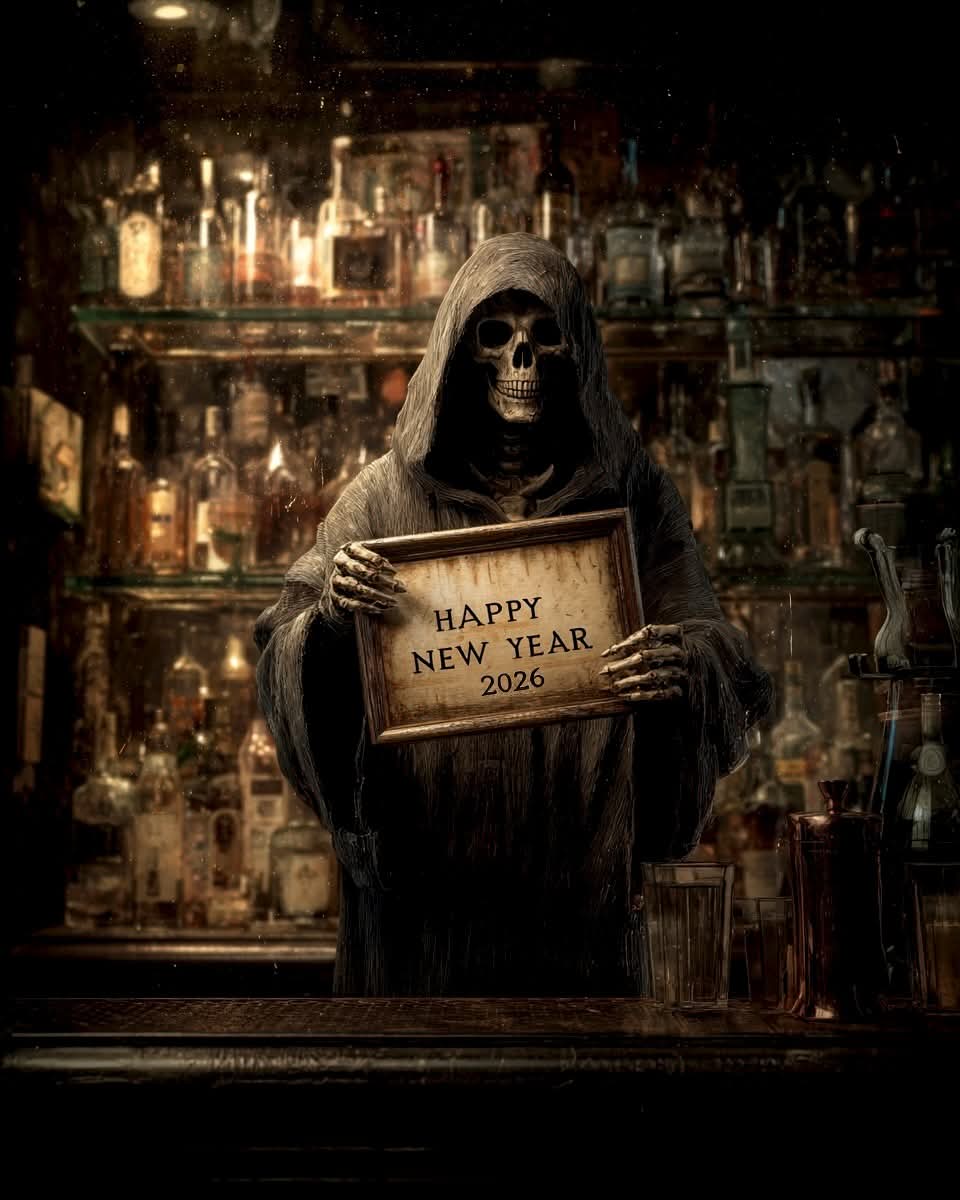
A year-end reflection on survival, strangers who became mirrors, and finally seeing the light at the end of a fucked-up tunnel.
Five years. Five goddamn years of 2020’s aftermath—each one stranger and more disastrous than the last. If you’d told me in 2020 that we’d spend half a decade in some twilight zone version of normal, I’d have believed you. Because of course we would. Of course the universe would take the worst year in recent memory and stretch it into a fucking epoch. But here’s the thing about disasters: eventually, you either get crushed by the rubble or you learn to build with it. And 2025? 2025 was the year I finally started seeing the blueprint for something different.
The Space Between: When Time Stops Making Sense
There’s something about the days between Christmas and New Year’s that fucks with your perception of time. It’s like the universe hits pause, and suddenly you’re existing in this weird liminal space where nothing feels real. What day is it? Does it matter? Are we still in 2025 or have we already left?
I’ve been caught in that wave of nostalgia that only hits during these dead days. The kind that makes you scroll through old photos at 2 AM, reading old texts from people who aren’t in your life anymore, remembering versions of yourself you barely recognize. It’s not sad, exactly. It’s more like watching a documentary about your own life—close enough to touch, far enough away to see clearly.
Time feels irrelevant in this stretch. Not in the “time is a construct” philosophical way, but in the very real sense that Wednesday could be Saturday and you wouldn’t know the difference. Work is paused. Responsibilities are suspended. The whole world is in this collective holding pattern, waiting for the clock to reset so we can pretend the new number means something.
And in that suspension, you see things differently. All the chaos of the year—the struggling, the grief, the small victories—it all compresses into something you can hold in your mind at once. The narrative starts to make sense. The through-line becomes visible. You see how the beginning connected to the middle connected to the end, even when you were too close to see it happening.
That’s what this space is for, I think. Not just rest, but reflection. Not just a break from the year, but a chance to witness what the year actually was before the next one demands your attention. It’s the only time all year when looking backward doesn’t feel like dwelling and looking forward doesn’t feel like anxiety. It’s just… witnessing.
So here I am, in the space between, feeling every year that came before this one and every year that’s coming after. Time feels irrelevant, but the weight of it feels heavy as hell. And somehow, that’s exactly right.
Lubbock: A Different Kind of Mirror
My biggest highlight of the year is I spent a week in Lubbock, Texas this year to see old friends for a wedding and in the process I got to meet some amazing people. Flying out of California—land of perpetual hustle, surface-level progressivism, and rent that costs more than some people’s mortgages—and landed in a place where the pace was different. Slower, maybe. But not in a bad way. Different in a way that made me realize I’d been running on California time so long I forgot there were other clocks.
The social dynamic hit me first. People actually stopped to talk. Not the “hey, how are you” that really means “don’t actually tell me,” but real conversation. Eye contact. Follow-through. It was disorienting as hell. I’d gotten so used to guarded interactions and strategic networking that genuine connection felt like I was doing it wrong. I’m pretty introverted by nature but I will interact with you and show you mutual respect. The people of Texas reminded me of a time where politeness went a long way.
My friends out there? They’ve built lives that don’t look like mine. Different priorities, different rhythms, different definitions of success. And the wild part? They’re not miserable. They’re not pretending. They’ve just built their architecture from different blueprints, and it’s holding up just fine.
It made me think about all the assumptions I’d carried around like gospel. The idea that there’s only one way to live, one path to success, one acceptable version of “making it.” Lubbock didn’t fix anything for me, but it cracked something open. Showed me that maybe the foundation I’ve been trying to build on isn’t the only option. That sometimes different isn’t wrong—it’s just different. And different might actually breathe better. The trip out there gave me some enlightenment. A simple life that I have been searching for where I can thrive more than just survive like a lot of people here in California are constantly on survival-mode.
2020-2025: The Lost Half-Decade
Let’s call it what it was: the first five years of the 2020s were a collective disaster. A pandemic that revealed every crack in every system we pretended was working. Social movements that started necessary and ended chaotic. An economy that gaslit an entire generation into thinking they were failing when the game was rigged from the start. Political theater that made satire obsolete. And a cultural exhaustion so deep that “doom-scrolling” became a recognizable addiction. We spent five years in survival mode pretending it was normal. We adapted to chaos and called it resilience. We learned to function in dysfunction and called it flexibility. And somewhere along the way, we forgot what stable even looked like.
And let’s talk about the information hellscape we’ve been living in. Social media and mainstream journalism spent these five years in a race to the bottom, competing for clicks and outrage instead of truth. Every headline engineered for maximum shock value. Every tweet designed to trigger a reaction. Every news cycle built around division because division gets engagement and engagement gets money and I remember at time where musicians were using shock value before it was cool and now it has become desensitized by mainstream media.
We watched journalism turn into entertainment and entertainment turn into propaganda, and nobody could tell the difference anymore. The goal stopped being “inform the public” and became “get the most hits.” Truth became secondary to virality. Nuance died because it doesn’t fit in a headline. Context got sacrificed at the altar of the algorithm. Both sides played the same game, just with different jerseys. Liberal media fueled outrage about conservatives. Conservative media fueled outrage about liberals. And all of it—every bit of it—was designed to keep us clicking, scrolling, fighting with strangers in comment sections instead of talking to our actual neighbors. Political division became the product they were selling, and we bought it by the truckload.
The worst part? It worked. We’re more divided now than we’ve been in decades, not because our actual values are that different, but because we’ve been fed a steady diet of rage bait and told that the other side is the enemy. We stopped seeing each other as people with different perspectives and started seeing each other as threats. And the media—social and mainstream—profited off every second of it. I’m not saying there aren’t real differences. There are. But when your business model depends on manufacturing outrage, you’re going to find it even when it’s not there. You’re going to amplify the most extreme voices because they get the most engagement. You’re going to present every issue as a war because war keeps people watching. My mother told me something a few years ago about today’s times and it really stuck with me.
“I have never seen this country this crazy, and I lived through the Detroit riots”.… Now let that sink in ladies and gentlemen.
Five years of this shit has left us exhausted, suspicious, and unable to trust any source completely. And that might be the most dangerous thing of all—when nobody believes anything anymore, truth stops mattering. And when truth stops mattering, we’re just living in whoever’s got the best propaganda machine. Maybe its time to just focus on what is in front of you instead of all that filth that feeds your brain on that 6-inch screen but as humans do (or at least in America) once something can be a useful and powerful tool that can benefit humanity, and as humans do, they find a way to abuse the shit out of it and use it for personal gain no matter how many vulnerable minds they poison and our media and politics did exactly that.
2026-2030: A Different Kind of Fight
So what about the next five years? I’m not naive enough to think they’ll be easy. The world hasn’t gotten less complicated. The systems that failed us haven’t been fixed. The challenges ahead are real: economic uncertainty, environmental collapse, political instability, all the existential dread that comes with living through interesting times. But its up to you if you want to let all those toxins consume your entire being when you know you’re meant for more in this world.
But here’s my bet on the next five years: we’re going to be better equipped for them. Not because the world will be kinder—it won’t—but because we’ve learned to build in chaos. We’ve developed immune systems for instability. We’ve turned survival skills into construction tools.I’m not looking for the next five years to be easier. I’m looking to be stronger when they inevitably get hard. And that’s the shift, right? The last five years taught us we can survive. The next five are about proving we can actually thrive. That we can take all this heavy, hard-earned wisdom and build something with it. Something that doesn’t just withstand disaster but transforms it into foundation.
I’m going into 2026 with a job I’m working to leave, grief I’m learning to carry, and a clearer picture of what different could look like. I’m going in with friends who showed me other ways to live, creative outlets that turn chaos into something tangible, and a family that’s learning to hold each other up differently. The overthinking isn’t going anywhere. The hypervigilance is permanent. The dark humor is a defense mechanism I’ll probably die with. But I’m redirecting all of it now. Using it to build instead of just survive. And that’s the real difference between the last five years and the next five: I’m not just enduring anymore. I’m constructing.
So here’s to 2025—the year that finally closed the book on the disaster era and opened the door to whatever comes next. Hopefully some good fortune and hard work finally paying off for people. Not just myself. Here’s to building architecture from wreckage. Here’s to different blueprints. Here’s to conquered challenges and hard-won optimism and wisdom.
The next five years are going to test us, and these tests are going to fuck with you. But we’ve been tested before and we kicked its ass before. And tested things still work—they just work differently. Gloves off now!
Keep your head on a swivel. But point it toward what you’re building, not just what you’re surviving.
See you at the next review at the end of 2026. Thanks for reading.
Post photo courtesy of Fyne Prynt Studios
https://www.instagram.com/fynepryntstudios?igsh=MzRlODBiNWFlZA==

