
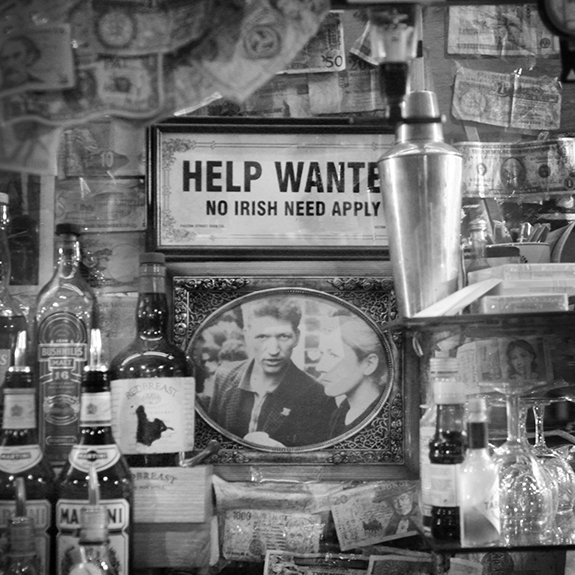
A Reflection St. Patrick’s Day Post for People Who Know the Difference Between a Celebration and a Costume.
Since this past Tuesday was St. Patrick’s Day, Let me tell you something about the Irish before you pour green dye in a river and call it a cultural celebration. The phrase “luck of the Irish” is one of the great historical jokes, and not the funny kind. It’s the kind of joke that lands differently once you know the punchline. Because if you study what this people actually went through, not the Hallmark version, not the pub crawl version, not the romanticized mythology version where everyone’s got red hair and a fiddle and a fireplace, you don’t walk away thinking luck. You walk away thinking these people were cosmically, relentlessly, almost impressively unlucky for about eight straight centuries, and yet here we are. Still standing. Still singing. Still finding something to laugh about at the funeral. That’s not luck. That’s something else entirely. Something harder to name and harder to kill.
And I think it’s worth talking about really talking about on a day when most people’s relationship with Irish heritage goes exactly as deep as the dye in their beer.
I. Eight Hundred Years of Getting Stomped
Since I am a history buff here’s the condensed version of Irish history that your green plastic hat doesn’t come with. England colonized Ireland starting in the 12th century. Not a soft colonization. Not a polite, “we’d like to suggest some administrative changes” kind of arrangement. The full package, land seizure, cultural suppression, legal persecution of the Catholic faith that made up the entire fabric of Irish identity. The Penal Laws made it illegal to practice Catholicism, own land, receive education, hold public office, or speak the Gaelic language. They didn’t just want the land. They wanted to erase the people from the inside out. Hollow them out, replace the contents, and keep the shell as labor.
For eight hundred years, this went on at various degrees of brutality. Eight hundred years. Let that land. The United States hasn’t existed for three hundred. The audacity of survival required to outlast eight centuries of systematic erasure is the kind of thing that doesn’t fit in a history textbook paragraph and definitely doesn’t fit on a button that says “Kiss Me I’m Irish.”
But even that eight centuries of colonial boot on your throat wasn’t the bottom.
The bottom came in 1845.
II. The Famine Wasn’t a Natural Disaster. It Was a Policy Decision.
The Great Famine. An Gorta Mór. The Great Hunger. A potato blight hit Ireland in 1845 and didn’t let go for seven years. The crop failed. People starved. Over a million people died, not from lack of food on the island, but from a British government that watched it happen and did the colonial math on whether Irish lives were worth the administrative inconvenience of intervention. And here’s the part that should make your blood boil through the green body paint: food was being exported out of Ireland the entire time. Cattle. Grain. Butter. Pork. Leaving on ships while people on the docks loading those ships hadn’t eaten in days. There’s a word for that. Several, actually. None of them are in the tourism brochure.
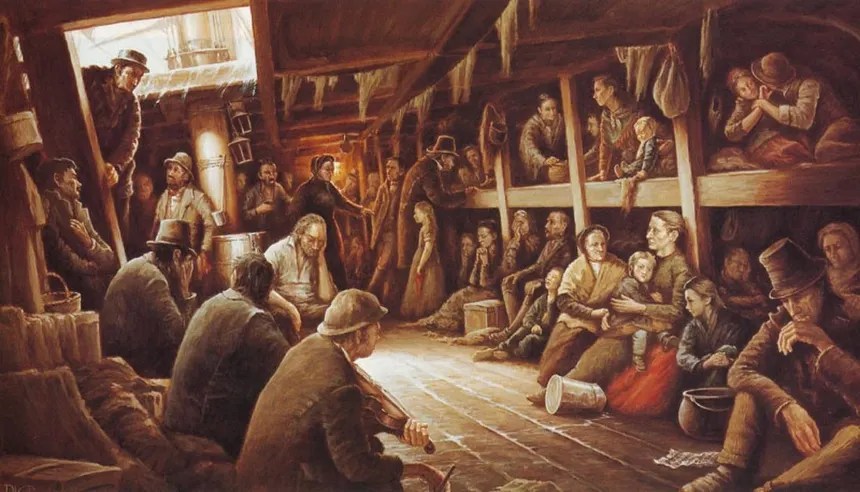
A million dead and another million fled on what became known as the famine coffin ships because the vessels were so overcrowded, so underprovided, so structurally indifferent to whether the human cargo arrived breathing, that roughly one in five people who boarded them didn’t survive the crossing. They were escaping a famine on a boat that was itself trying to kill them. That’s not a metaphor. That’s the literal historical reality of what “leaving for a better life” looked like. And here’s what I need you to sit with for a second: these weren’t people who had options. There was no Plan B. No LinkedIn. No “I’ll just take a gap year and reassess.” It was board the death ship or die in the ditch you were already dying in. They chose the ship. Every single one of them chose the ship. With nothing. Sick, starving, grieving people who’d already buried half their families got on boats that might bury them too, because the alternative was surrender and apparently, surrender wasn’t in the Irish vocabulary.
That decision and that decision alone is the entire Irish story compressed into a single moment. That’s what you’re celebrating today, whether you know it or not. Not just the religious perspective with the “snakes” but the escapism to pray for a better life and at that time that light was very dim. But hope was still there, no matter how bleak.
III. America: Where They Landed Into a Different Pair of Boots
So they survived. Some of them. The ones who made it to Ellis Island and the docks of Boston and New York didn’t step off the boat into the promised land. They stepped off into a country that was not particularly thrilled to see them. “No Irish Need Apply.” Signs in windows. Cartoons in major newspapers depicting Irish immigrants as subhuman, ape-featured, violent, drunk, a threat to civilization. Packed into the worst tenements in the worst neighborhoods, doing the most dangerous jobs for the lowest wages, and still being told they were lucky to have the work. The same Protestant establishment that had made their lives hell across the Atlantic had cousins over here who were happy to continue the tradition with fresh enthusiasm. It’s all what you make of it, right?
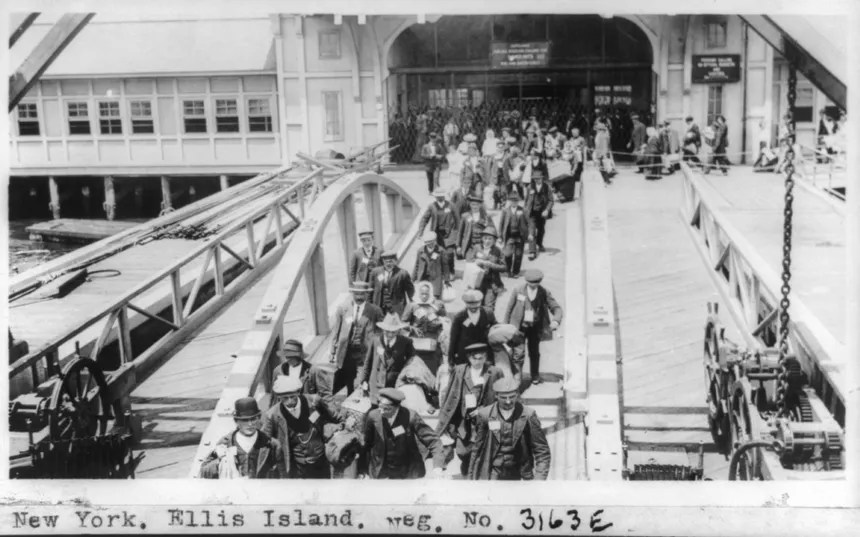
They built the railroads. They dug the canals. They filled the police departments and fire stations of cities that had told them they weren’t welcome. They sent their sons to die in a Civil War for a country that had greeted them with contempt, because they understood with the bone-deep clarity that only comes from having nothing that belonging to something worth building was better than standing outside it with your arms crossed. Within two generations, Irish immigrants went from “subhuman threat to society” to the backbone of American urban political life. Mayors. Senators. A president. Not through luck. Through the specific kind of stubborn, grinding, I-don’t-give-a-fuck-what-you-think-of-me work ethic that you develop when the alternative has always been death. Survival was your only motivation, not a dream.
IV. They Were White. It Didn’t Matter.
Now for a hot button The modern internet cannot process the Irish. Doesn’t know what to do with them. Can’t file them correctly. Because the Irish walk into the conversation pale-skinned, European, and Christian, and the algorithm of outrage looks at their complexion and tries to hand them a privilege card, and the Irish response, historically and correctly, is to look at that card, look at the eight centuries of famine and coffin ships and ape cartoons, and say are you fucking serious right now? They should have been fine. Same skin tone as the men running the country. Same continent. Same God, technically, and that “technically” is doing the heaviest lifting in this entire story, because the flavor of Christianity you practiced turned out to matter more than the fact that you practiced it at all. They stepped off those coffin ships already half-dead, already wearing grief like a second skin, and America looked at them and decided: “nope. Not us. Something else entirely.” And then got to work explaining why.
The Know-Nothing Party: stop and appreciate that this was the actual functioning nickname of a real political organization controlling governors’ mansions and congressional seats, because if that doesn’t tell you everything about the self-awareness of organized bigotry, nothing will, rose to genuine power in the 1850s on a platform built entirely on keeping Irish Catholics the hell out of American life. Over a million members. Entire state governments. Their thesis, delivered with the confidence of people who had never once been hungry, was that the Irish were a cancer on the American body. Not because of how they looked. Because of how they prayed, how they talked, and the very specific threat that starving, unbreakable people pose to comfortable ones who’ve spent their whole lives mistaking inherited advantage for personal virtue. The newspapers supplied the imagery.
Thomas Nast: here is one of history’s genuinely perfect dark jokes, the same man who drew the jolly, rosy-cheeked Santa Claus we still use today spent years drawing Irish immigrants in Harper’s Weekly as literal apes. Santa Claus and simian caricatures of starving immigrants. Same pen. Same man. Same legacy. History has a sense of humor. It’s just a really fucked up one. Academia climbed in right behind scientific racism formally classified the Irish as a separate and inferior race, the “Celtic” versus the “Anglo-Saxon,” complete with skull measurements and published studies. Peer-reviewed hatred. The original misinformation campaign, just slower and with better footnotes.
Charles Kingsley: celebrated British intellectual of his era visited Ireland and described the people as “white chimpanzees.” His word. White. He acknowledged their complexion and still reached for the most dehumanizing image available, because the hatred was never about pigment. It’s about otherness. Accent. Poverty. Catholicism. The terror that people with nothing left to lose inspire in people with everything left to protect. In parts of America they were called “white negroes” not as a bar fight insult but as a formal social classification. You may be pale, but you are not us. They got slotted into the bottom of the hierarchy like furniture into a storage unit. Shoved in, stacked, forgotten and handed the most dangerous work in the worst conditions for the lowest wages. They dug the Erie Canal in conditions so lethal the worksites became known as the Irish graveyard, because Irish lives were cheap enough to spend on infrastructure that would have required actual safety precautions if the men doing the dying had mattered to anyone making the decisions.
V. Now here’s the uncomfortable part, because this blog doesn’t do comfortable
Some Irish immigrants, as they bloodily dragged themselves off the bottom rung, pulled the ladder up behind them. As they assimilated into the constructed, political category of whiteness, the membership list America invented to decide who belongs and who serves, some weaponized it. Turned the experience of being dehumanized into fuel to do the same thing downward. I’m not softening that. It happened. Name it. But understand what desperation does to people who’ve been starved of power. The first taste of it doesn’t always make them generous. Sometimes it makes them grip it so hard their knuckles go white. Complexity isn’t a moral loophole. It’s just the truth, which is always messier than the version that fits in a caption.
Here’s what all of it actually proves:
Race is a story. A story powerful people tell to justify decisions they’ve already made. It is not biology. It is not written in the bone. It’s a costume that gets tailored and put on whoever needs to be controlled at any given moment, and quietly discarded when the political weather changes. The Irish were white and it did not protect them because the people in power just reclassified them. Picked up a pen, redrew the line, backed the whole thing up with skull measurements and newspaper cartoons until it felt like science. The hatred was never about melanin. It was about power and who had it, and who was threatening to eventually demand some of it. The Irish response was not to petition for inclusion. Not to appeal to the conscience of a system that had already demonstrated it didn’t have one. It was to build a door, put it in the wall themselves, walk through it, and change the locks. The political machines, the union halls, the community institutions built from scratch because the existing ones had bolted their doors. Tammany Hall was corrupt, say it, own it but it was also organized power constructed entirely by people locked out of every existing power structure, and it worked. Within two generations, Irish immigrants went from “white chimpanzees” in nationally distributed magazines to mayors, senators, union bosses, and eventually the President of the United States.
Not because America had a change of heart. Because the Irish made themselves impossible to remove.
Like every generation before them left a note that said: keep going. Don’t ask. Just go.
That’s something worth carrying.
VI. The Dark Humor Was Never a Coping Mechanism. It Was a Survival Tool.
Here’s the thing about Irish culture that I find genuinely remarkable, and I don’t use that word carelessly: through all of it, the colonization, the famine, the coffin ships, the discrimination, the poverty and they never stopped being funny. Not funny in the way that people make dark jokes to seem edgy. Funny in the way that people laugh because the alternative is a level of despair that would end them. Funny in the way that you find the absurdity in your own suffering before the suffering finds a way to make you take it too seriously. Humor was coping mechanism for The Irish.
The Irish wake is the perfect encapsulation of this. You die. Your family gathers around your body. And they drink, and they tell stories, and they laugh, genuinely laugh because grief without humor is just grief, and grief without an exit ramp becomes a place you live forever. They understood, on a cultural level so deep it became genetic, that darkness doesn’t get to have the last word. You can mourn and celebrate simultaneously. You can hold the weight of history in one hand and a pint in the other. You can look at the worst thing that ever happened to you and say yeah, and here’s the part where it gets funny and mean it. That’s not avoidance. That’s not denial. That’s a philosophy of survival so sophisticated that most people can’t access it without eight hundred years of practice. The humor was the pressure valve. The humor was the armor. The humor was how they looked at the boot on their neck and said I see you, and I refuse to let you be the most interesting thing about me.
Try developing that kind of perspective on a comfortable timeline. You can’t. You have to earn it through something that costs you.
VII. What Generational Resilience Actually Looks Like
The internet loves generational trauma. It’s a whole content category at this point. A genre. A brand. People packaging their ancestors’ suffering as a current identity, wearing it like a varsity jacket, presenting their bloodline’s pain as an explanation for their own limitations or worse, as a debt everyone around them owes. I’m not here for it. And I don’t think the Irish are, either. That’s no better than the pharmaceutical companies making money off of your addiction. Because look at what was actually passed down. Not the wound but the response to the wound. The dark humor that finds the punchline in catastrophe. The work ethic that was forged in conditions where stopping meant dying, so stopping was simply never considered. The community loyalty and the fierce, almost aggressive loyalty to your people that developed because for centuries, your people were the only thing standing between you and total annihilation. The stubbornness. holy shit, the stubbornness. The specific brand of Irish stubbornness that looks at “impossible” and hears “a challenge with terrible marketing.”
These aren’t trauma responses. These are adaptations. Evolutionary upgrades written in blood and passed down through generations of people who survived things that should have ended them. And the difference between carrying your ancestors’ wounds and carrying their weapons is the difference between a lineage that collapses under its own history and one that builds something from it. The Irish built something from it. Repeatedly. On multiple continents. Under conditions that would have dismantled lesser cultures entirely.
That’s the inheritance. That’s what’s actually worth claiming today, not the suffering, not the victimhood, not the eight centuries of colonial oppression as a pity card to play in every conversation. The pivot. The ability to look at everything that tried to end you and say not today, and not ever, and also, frankly, go fuck yourself and then go build something anyway.
VIII. The Scar, Not the Wound
Here’s how I think about legacy, Irish or otherwise:
Wounds are open. They bleed. They demand attention and accommodation and careful handling. Everything has to work around the wound. The wound becomes the organizing principle of the whole body. Scars are different. Scars are proof that the wound closed. That the body fought back, rebuilt, and covered the damage with something tougher than what was there before. Scar tissue is denser than regular tissue. It’s harder. Less sensitive in some ways, more in others. It doesn’t look pretty. But it holds.
The Irish are a people made of scar tissue. Centuries of it, layered and dense and built from things that should have been fatal. And you don’t look at a person covered in scars and say, “Tell me more about the wounds.” You look at them and say, “How the hell are you still standing?” And then you listen to the answer, because people who are still standing after that have something worth hearing. What they have to say isn’t “look how much we suffered.” It’s “look what we built from the suffering.” And that story, the building story, the pivot story, the we-got-the-fuck-back-up story is the one worth telling on every St. Patrick’s Day that gets reduced to green body paint and bar fights.
IX. This Is Not a Pissing Contest. And That’s the Whole Point.
Let me be direct about something before this gets misread — because the internet has an extraordinary talent for taking honest history and turning it into ammunition for the Oppression Olympics, and I’m not writing this to hand anyone a weapon. This is not a “my people had it worse than your people” post. I don’t give a damn about that competition. It’s a stupid competition with no finish line, no winner, and no prize, just an ever-expanding roster of people collecting their ancestors’ suffering like trading cards and using the stack to justify why they can’t get off the couch today. The internet loves that game. Runs on it. The trauma hierarchy. The suffering scoreboard. The endless debate about whose history is heaviest, as if the weight of the past is something you’re supposed to carry into every room for the rest of your life and lay on the table before anyone’s allowed to take you seriously. Your ancestors suffered but what the fuck does that have to do with you now in 2026?
That’s not what this is. This is honest history. The kind that gets sanitized into pub crawls and plastic hats because the real version is too uncomfortable to sit with over a green beer. The kind that, when you actually look at it, the famine, the coffin ships, the canal graveyards, the ape cartoons, the academic race classifications, the political exclusion, all of it doesn’t make you feel sorry for the Irish. It makes you understand them. There’s a difference. Pity is passive. Understanding is useful. Because here’s what the trauma content economy doesn’t want you to do with history: learn something from it that makes you harder to manipulate and harder to defeat. It wants you to consume the suffering, feel bad about it, share it, and stay exactly where you are emotionally activated, intellectually passive, and reliably online. That’s the business model. Your pain, packaged and monetized, served back to you at regular intervals so you never have to do anything with it except feel it.
The Irish didn’t have that option. They couldn’t log off from the famine. They couldn’t unfollow the coffin ship. They couldn’t post about the discrimination and call it awareness. They had to actually move. Actually build. Actually decide, every single day, in conditions that would flatten most modern people inside a week, that the circumstances were not going to be the end of the sentence. And here’s the part that I think is worth saying out loud in a culture that has completely lost the thread on this: Your ancestors, Irish, or whatever bloodline brought you here, did not survive what they survived so that you could use their suffering as an excuse for yours. To be honest, they would kick the shit out of you for showing the world that your being so weak and looking for pity.
Read that again!
They didn’t starve on the road to Skibbereen so their great-great-grandchildren could point at systemic hardship and stop there. They didn’t board coffin ships with a one-in-five chance of dying enroute to a country that didn’t want them so that “it’s hard” would be an acceptable reason to quit. They didn’t dig canals until their bodies broke, organize unions when unions would get you killed, build political machines from absolute nothing in cities that had posted signs in the windows telling them to stay out, they didn’t do any of that so that the inheritance they left would be used as a reason to stay down instead of a blueprint for getting the fuck up. The circumstances were real. The oppression was real. The history is documented, brutal, and not up for debate. None of that is the lie. The lie is that any of it is a reason to stop!
That’s the thing today’s culture has completely inverted. It has taken legitimate historical suffering, real pain, real injustice, real systemic cruelty and turned it into a permission slip to not try. Dressed up victimhood as wisdom. Called it awareness. Built entire identities out of what happened to people’s ancestors and then presented the construction as depth. As if the most meaningful thing about you is what was done to the people who came before you, rather than what you choose to do with what they left behind. Your circumstances are real. Your history is real. Your pain, whatever shape it takes, is real. I’m not dismissing a single piece of it. But none of it gets to be the last word. Not in your life. Not if you’ve read this far and understood what the people in this story actually faced before they decided to keep going anyway.
Toughen up isn’t the dismissal the internet has decided it is. It’s the most Irish sentence ever written. It’s what every generation of every people who ever survived something un-survivable said to the generation that came after them not because your struggle isn’t real, but because they knew from experience that the struggle being real is not the point. The point is what you do when you’re standing in the middle of it You don’t honor your ancestors by carrying their wounds forever. You honor them by turning those wounds into the thing that makes you impossible to break. That’s the whole story. That’s been the whole story this entire fucking time!
X. Raise a Glass to the Right Thing
So today, between the parade and the whiskey and the inexplicable tradition of dyeing perfectly innocent rivers an unnatural color, take a second and raise a glass to the actual story.
To the million who didn’t make it and the million who got on the ships anyway.
To the people who built cities in countries that told them they weren’t welcome, because building was all they knew how to do.
To the work ethic that was never about ambition, it was about survival dressed up in ambition’s clothes, so well that eventually it became the same thing.
To the dark humor that looked at eight centuries of getting stomped and decided to find the bit in it, because if you can laugh at the worst thing that ever happened to you, the worst thing that ever happened to you loses its hold.
To the stubbornness that still runs in the bloodline, that hardwired, deep-in-the-marrow refusal to let difficulty be the final word on anything.
And to the pivot. Always remember the pivot. The moment where suffering becomes architecture. Where the thing that tried to break you gets repurposed as a load-bearing wall.
That’s the luck of the Irish. It was never luck at all. It was something harder, something uglier, something that took eight hundred years and a famine and coffin ships and a country that didn’t want them to build.
And it is, without question, the most remarkable inheritance any bloodline has ever passed down and I am proud to be a part of that heritage. So cheers everyone. Thanks for reading.
Éirinn go Brách. 🖤🍀
 Reaper's Reflections